Rural Voters Are Turning on Trump — And Farmers Are Leading the Way

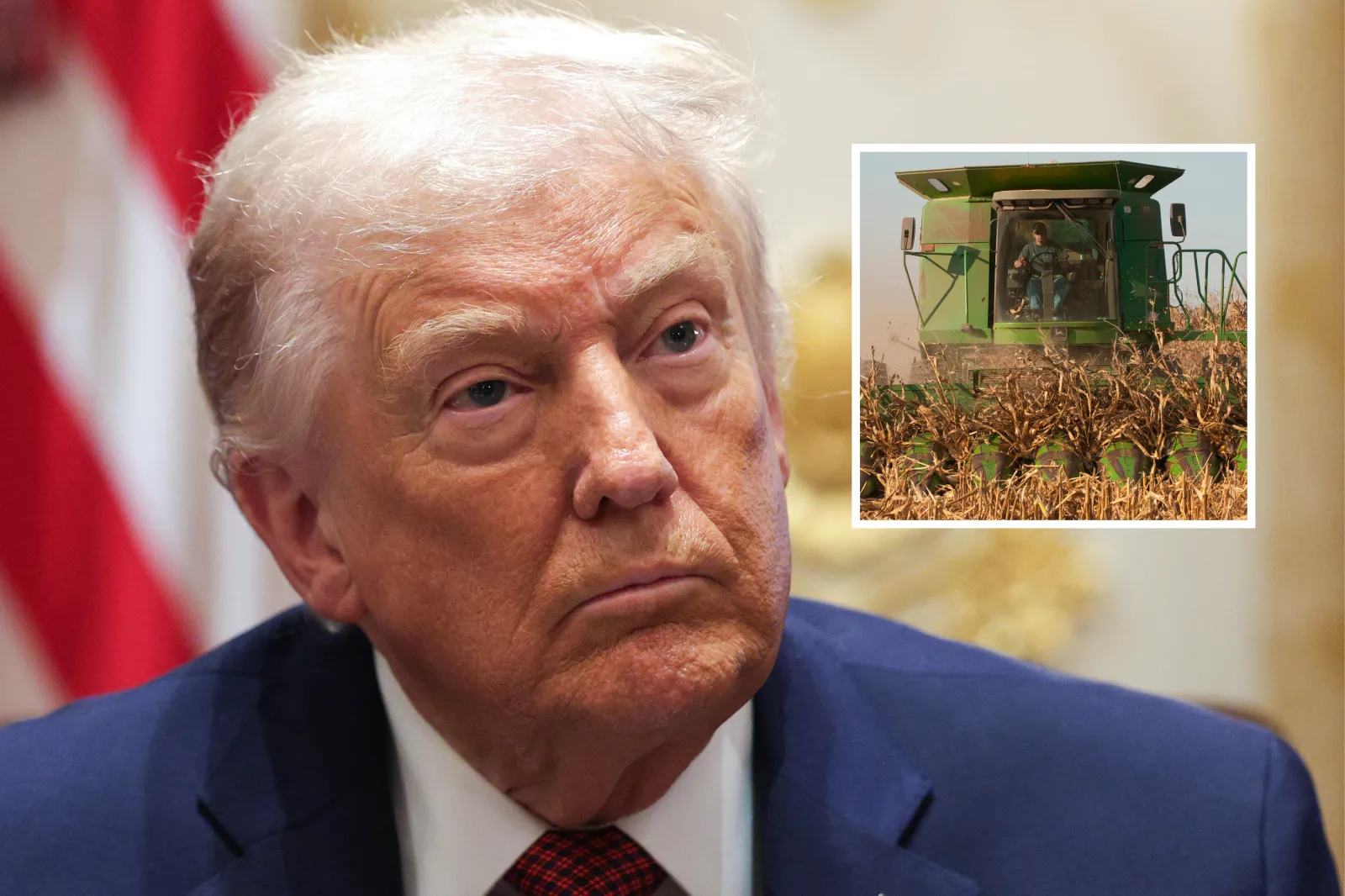
For years, rural America has been one of the most dependable sources of political support for Donald Trump. But new polling data suggests that relationship is under serious strain — and the pressures hitting farm country may be a big reason why.
A Fox News poll conducted May 15–18, 2026, among 1,002 registered voters nationwide shows Trump's approval rating among rural Americans has slipped into negative territory for the first time since early 2025. That's a significant development for a president whose electoral margins have long depended on strong turnout and enthusiasm from voters outside major cities.
What the Numbers Show
The poll was jointly conducted by Beacon Research, a Democratic-aligned firm, and Shaw & Company Research, a Republican-aligned firm. Voters were reached by landline, cellphone, and online text-to-web surveys drawn from a national voter file, with a margin of error of plus or minus 3 percentage points.
Trump's net approval among rural voters has swung 34 points in roughly 15 months — from +20 in early 2025 to -14 in May 2026. Among rural white voters specifically, the drop is nearly as dramatic: a 33-point slide from +27 to -6. Both groups are now registering their lowest approval levels in this polling series.
The sharpest single-month drop came between April and May 2026, when rural voter net approval fell 16 points — from +2 to -14.
Republican pollster Daron Shaw, who co-conducts the survey with Democratic pollster Chris Anderson, described the erosion plainly.
"Despite consistently strong GOP support, the president's numbers are leaking a bit," Shaw said. "Make no mistake; it's all about affordability. Independents jumped ship in 2025, and now non-MAGA Republicans and other core constituencies are wavering."
Trump's overall approval sits at 39 percent in the poll — just one point above its lowest level in the series. His handling of the economy drew approval from only 29 percent of voters nationally, with 71 percent disapproving. Rural voters tracked almost identically: 30 percent approved and 70 percent disapproved.
Inflation is where voters express the most frustration. Just 24 percent approved of Trump's handling of rising prices, while 76 percent disapproved — the worst rating of any issue tested in the poll. Among rural voters, 28 percent approved and 71 percent disapproved.
Even border security — once a reliable area of strength — has tipped into negative territory nationally for the first time this term, with 49 percent approval and 51 percent disapproval. Rural voters still lean positive on the issue at 54 to 45 percent, but the gap is narrowing.
Farmers Are Feeling It Most
Behind the polling numbers is a wave of financial pain hitting farm operations across the country. According to the American Farm Bureau Federation, farm bankruptcies rose 46 percent in 2025 compared to the year before — a sign of how badly debt and production costs have squeezed the agricultural sector.
Those pressures have grown worse in 2026. The escalation of conflict involving Iran has pushed up diesel and fertilizer prices, two costs that hit farmers directly and repeatedly throughout the growing season.
Willis Nelson, a Louisiana farmer, described the situation to MS Now in terms that many agricultural families across the country would recognize.
"We're not financially able" to operate as normal, Nelson said, explaining that his family has had to cut back on fertilizer use because "we just don't have the margin."
Nelson's family farm — one that has operated across multiple generations — is now facing the prospect of bankruptcy.
"It's tough, you know, very tough on us," Nelson added.
Fred Yoder, an Ohio farmer, offered a stark breakdown of the daily costs in comments shared by Farm Action from an interview with US Farm Report.
"It's costing us about $1,500 of cash per day to run two tractors," Yoder said. "I spent many years buying potash for $90 a ton, and now it's $670 to $700 a ton. Our big problem is the input costs. I haven't seen anything this bad since the 1980s."
Trade tensions have added another layer of difficulty. Reduced Chinese demand for American soybeans and other agricultural exports has left many farmers with fewer buyers and weaker prices. Trump's recent comments during a trip to Beijing — in which he defended Chinese purchases of U.S. farmland by arguing that restrictions would hurt land values — have added to an already uneasy atmosphere in farming communities concerned about foreign ownership of agricultural land.
Why This Matters Politically
Rural voters don't just represent a cultural or symbolic base for Republican candidates — they represent real electoral math. In Senate and House races across battleground states, even modest shifts in rural turnout or enthusiasm can change outcomes. A 34-point swing in net approval among rural voters, if it holds, is the kind of movement that campaign strategists pay close attention to heading into midterm elections.
The Fox News poll also found that Trump's approval among Republicans more broadly has fallen to its lowest level of his second term — a notable development given how stable that group has historically been compared to independents or Democrats.
The White House's View
Administration officials disputed the significance of the polling numbers. White House spokesman Kush Desai described the U.S. economy as "resilient" under Trump's leadership and argued that more improvement is on the way.
"As this agenda continues taking effect, and as Congress passes more of the president's healthcare and housing affordability agenda, the best is yet to come in the second Trump term," Desai said.
Spokesman Davis Ingle pointed to Trump's 2024 election victory as a more meaningful measure of public sentiment than any single poll.
"The ultimate poll was November 5th 2024 when nearly 80 million Americans overwhelmingly elected President Trump to deliver on his popular and commonsense agenda," Ingle said, adding that the administration is "working tirelessly to create jobs, cool inflation, increase housing affordability, and more."